Thursday, March 8, 2012

Gains and Strains for the LGBT Community


Gains and Strains for the LGBT Community

While people’s conceptions of Long Beach have often times formed beneath the giant shadow of neighboring Los Angeles or through the rap lyrics of famous former gangsters, the formation of a relatively new conception of the city is beginning to take hold.  It’s a conception that encompasses all walks of life that populate or visit the concrete jungles and beachside villas of this diverse metropolis.  Emphasizing the importance of openness and acceptance, one of the most significant results of this new conception has been the securing of Long Beach among the latest up and coming LGBT-friendly cities in the nation.
            The distinguishing of Long Beach’s LGBT population from its overbearing neighbors West Hollywood and Los Angeles is a notable accomplishment, however, many challenges still await the community.  Ishmael Morales, Director of Health Services at The Center Long Beach, previously lived and worked at the LGBT center in West Hollywood.  He came to work for The Center after becoming inspired to advocate for AIDS Awareness among the homosexual Latino population of the city.  In the four years he has spent working at The Center, Morales says the number of free AIDS tests administered has gone from 48 to 140 per month.  “In terms of the city, people are less ignorant regarding HIV,” he says.
            Serving over 21,000 people each year and functioning as the “central core of the Greater Long Beach LGBT communities,” The Center offers countless resources ranging from legal justice information to cultural and social activities.  However, with a limited staff and the larger Los Angeles population harboring more of a target audience, Morales admits The Center is often left “fighting for little grants and donations… the four or five other HIV organizations in Long Beach are all fighting for access to funds leftover from the L.A. Health Department, the state and the federal government.” 
            Although Long Beach has had its share of setbacks, Morales says it’s the “small town masked as a big city” mentality that has helped solidify the presence of the LGBT community in recent years.  He concedes that while the small town aspect of the city does have its downsides, such as making it more difficult to uphold a pristine reputation among the tight-knit social circles, the pros of something as simple as “not having to see people double-take when I mention my partner at the coffee shop,” are well worth the cons. 
            Like Morales, The Silver Fox bar manager Gonzalo Gonzales Jr. feels Long Beach’s “down to earth, family-oriented” openness among the local gay population provides a nice alternative to the “shadiness” of Los Angeles.  The Silver Fox, which according to it’s website was “established in 1981 by Ron Waddell and John Schinnerer as Southern California’s first video entertainment club,” attracts large crowds of regulars daily due to its charismatic bartenders, drink specials, and enthusiastic karaoke singers.

Besides the interesting perks that come along with being a bartender at a popular gay bar, Gonzales enjoys his establishment’s commitment to community involvement.  “We have a lot of LGBT affiliated fundraisers, like with St. Mary’s [Medical Center] and different DJ’s who come in weekly. Every year, my boss spends months collecting for the Toys for Tots fundraiser.”
For many people of the LGBT community, moving to Long Beach was not only a physical change of scenery, but a much-needed life transition.  Floyd Linzie, 24, moved from suburban Northern California to Long Beach over a year ago to pursue a degree in dance at CSULB.  While he acknowledges Northern California can be very liberal, his hometown of Santa Rosa still has many conservative people. 
With his feminine attributes and unique fashion choices, he felt “being openly gay and Black made me stand out like a sore thumb. Here, it’s different, I love it.”  While Linzie loves Long Beach, he feels “just because it’s gay friendly, doesn’t mean I can necessarily walk around and hold hands with a boyfriend. There’s still hate in the world, and there’s still work to be done.”
As recently as late summer and early fall of 2011, multiple reports of gay bashing that resulted in several victims being beaten and injured on Broadway Avenue stirred up many mixed emotions among the community at large.  Long Beach Mayor Bob Foster and various city councilmen asked the Long Beach Police Department to come into The Center to participate in a public forum.  “The room was filled with people asking questions and getting answers.  The same thing could have happened in L.A., but here we dealt with it in positive, intimate way.” 
While Long Beach continues to face violence and hate similar to any other city, it’s the way in which the community is beginning to confront these issues that sets it apart and makes it a more desirable place to live for all residents.

The Center Long Beach is located at 2017 East Fourth Street and is open Monday through Friday 11 a.m. to 9 p.m., and Saturday 12 p.m. to 3 p.m., and welcomes everyone. For more information call (562) 434-4455.  The Silver Fox is located at 411 Redondo Avenue and is open Monday through Friday 4 p.m. to 2 a.m., and weekends 12 p.m. to 2 a.m. 

By Sofia Yassine

Breast Cancer Angels

Breast Cancer Angels, a nonprofit organization in Los Alamitos, has successfully fulfilled their mission of providing financial and emotional assistance for women and their families going through breast cancer treatment since the year 2000.


Faye Dietiker, a breast cancer survivor herself, founded the all-volunteer organization and assists more than 500 clients a year as Breast Cancer Angel’s executive director.

“I feel for the women and their families because I know what they are going through,” said Dietiker. “It is the most rewarding feeling to bring relief to families suffering from such a horrible disease.”


Of all the programs Breast Cancer Angels offers, the housing needs plan is one that should not go unnoticed. To many peoples’ surprise, families and even single women can become homeless while fighting breast cancer. The doctor visits, necessary treatments, and other expenses can be too much for patients to handle and therefore lead to lack of the necessary finances to live. The situation can even worsen when the woman can no longer support herself or her family members.


In response, Breast Cancer Angels has created a facility called Grandmas’s House of Hope through its many donations. At this facility, the group gives homeless women $500 a month for rent and food. In fact, Breast Cancer Angels is the only organization that offers assistance with monthly housing costs for women in metastatic breast cancer treatment.


“It is devastating to see women having to struggle with breast cancer while also struggling to keep their families housed, clothed and fed. That’s where we come in and provide support so that they can lead a comfortable life and a positive road to recovery,” said Dietiker.


Breast Cancer Angels is currently providing housing for 6 homeless women, all of which were working or searching for employment when they were diagnosed with cancer. Four now live at Grandmas's House of Hope and another condo has been purchased to expand available room.


Breast Cancer Angels has come a long way and still plans to expand in 2012. They plan to continue providing housing for families in financial crisis. In addition, they have a food program established to provide gift cards for families’ grocery needs. The average household will receive $250.00 per month. The organization also provides gift cards to local discount stores for the women's children to buy clothes and other necessities.


Some heartfelt responses from women really show the impact these programs are making.

“I had $7.00 and no food in the house when your food certificates came in the mail. Thank you so much,” said Debi D.


Kim R. also expressed her appreciation toward their programs.


“I want to thank you for all of your help for my good friend, Shelly C.,” Kim said. “Without your group she would not have been as strong as she was. You helped her in such a big way. We will always remember your kindness."


The nonprofit organization offers even more financial care for victims of breast cancer. They not only provide short-term home health care, but they also assist with any final expenses. They also have a unique fund that gives new patients a chance to get a second opinion on their condition so that they can improve their chances of survival. A scholarship fund is also available to help students whose lives were affected by their mother’s breast cancer treatment expenses. Lastly, Breast Cancer Angels even offers a pro bono attorney to help with legal issues such as child custody.


In addition to their enormous aid to women, Breast Cancer Angels have even assisted 5 men since their establishment in 2000.


“We are here to help in any way possible so we are definitely not limited to women,” Dietiker said. “In the end we just hope that we can affect numerous lives for the better.”


Clearly, Dietiker’s selfless attitude and hard work have really paid off. Breast Cancer Angels will continue to make people aware of the hardships breast cancer patients face and will hopefully find more “angels” to provide care and benefits for women fighting breast cancer.


Shannon Smythe

Immigration to Long Beach


Kristin Strange
Immigration
03/08/12

An estimated 7 to 20 million illegal immigrants are living in the United States. Of those illegal immigrants, at least 56 percent are said to have come from Mexico and 22 percent from Latin American Countries, according to a study from Pew Research Institute.

Organizations like Centro CHA are working to help immigrants become self-sufficient and get their citizenship. Centro CHA, an organization made to help the Latina population living in the Long Beach, offers many resources for both residents and immigrants.

All of the programs offered by Centro CHA are to help the Latino Community. Their many programs offer leadership skills, reproductive health services, paid job training, tutoring, literacy and safety classes and help with the citizenship process.

Jessica Quintana, Executive Director of Centro CHA, says it takes about 6 months to 2 years to become a citizen. “For those who are undocumented they have to live as a Permanent Resident for at least 3 years. During those three years they must have good moral conduct, pay their taxes, support their children if they have a family and have no criminal record. If they live three years under these conditions they almost always get approved for citizenship.”

We now have over 11 million illegal immigrants in the United States and 6,640,000 of those immigrants are from Mexico, according to the US Census.  Each state spends between 11 and 22 billion dollars a year to provide welfare, medical, food stamps and education to immigrants. 

Centro CHA has programs that help immigrants get settled in their new life and not have to rely on government assistance.

The LEAP and LIFT programs help young adults with job training and placement, internships, staying in school and violence prevention.

Quintana has seen what an impact these programs have made. “It completely transforms their lives. It sparks awareness in them and helps build self confidence”

Annette Quintero, with Long Beach Immigrant Rights, is working for a more humane immigration policy.

“The LBIRC works on advocacy, issued-based policies at the local, state, and federal level, provides services to the immigrant community, regardless of immigration status and educates the broad community on the realities and myths of immigration and the need for comprehensive immigration reform”

Long Beach Immigrant Rights coalition offers many services including ESL and citizenship classes, community legal clinics, and knows your rights trainings.  All services provided are free to the community. 

Quintero says that immigrants cannot be put into just legal and illegal categories.

According to fairus.org, the term “illegal alien” is used to describe someone in our country in violation of our immigration laws.

A newer term, “undocumented immigrant”, doesn’t distinguish between those legally admitted immigrants and those who have sneaked into the country or violated the legal entry terms.

Ana Bonilla, of Building Healthy Communities, recognizes that immigration reform is linked to economic development and the well being of all Long Beach community members. She also knows many community members have advocated for immigration reform.

“In the Community Action Plan, that was written, now over two years ago, the community did want to advocate for the passage of such acts as the California and Federal DREAM Act and also to mobilize on issues locally, statewide and nationally regarding immigration reform”

One major threat to immigration reform is the idea that immigrants will take away US citizen’s jobs.

According to Fairus.org, illegal immigrants are able to use fake employment documents and will often work for lower wages then many US citizens would.  It is estimated that around eight million illegal immigrants are currently working in the US workforce.

Job availability is not the only problem facing immigration reform.

Taxpayers are paying around 36 million dollars a year to fund illegal immigrants schooling, medical bills and incarceration.

Although ideas of amnesty and guest worker programs seem like they would help, many of those working illegally are unlikely to change their status and they often don’t have the educational preparation or language skills to get work anywhere else, according to fairus.org.

Despite the fact the immigration continues to grow, the number of deportations is low. In 2003, only 186,151 aliens were formerly removed, according to the Yearbook of Immigration Statistics. Also, The Federal Bureau of Prisons estimates that nearly three-tenths of its prisoners are aliens.

Despite facts against them, organizations like Centro CHA, Long Beach Immigrants Rights Coalition and Building Healthy communities continue to support both immigration as well as immigration reform.

Wednesday, March 7, 2012

Long Beach Takes Pride in LGBT Community

Long Beach Takes Pride in LGBT Community


Long Beach is quickly becoming known for being one of the gay-friendliest cities in California and the entire United States. Long Beach has always been one of the most diverse cities in the U.S. and the city has undergone many changes to accommodate and welcome the gay community.

The city of Long Beach has a number of businesses and organizations that cater to the LGBT audience. Even Cal State Long Beach has programs and clubs run by students in hopes of creating a more visible and welcoming atmosphere for LGBT students.

Long Beach has been steadily building a foundation to support members of the LGBT community since the mid-80s. One of the most valuable places for members of the community to receive information on programs and services is The Center located on Fourth Street, which serves as the gay and lesbian resource center of central Long Beach.

The Center is open six days a week and provides information on a range of subjects including HIV testing, art shows, diversity training and outreach to the LGBT community in Long Beach. The Center also includes an LGBT library, information on voter registration, mental health support groups and a hate crime hotline.  
The Center is run by private donations only, meaning it is completely dependent on the community itself to survive. It’s a situation where the community gets exactly what it puts into a situation. Without the support of the LGBT community, resources like The Center would not be available.

As we move toward the spring season, the event of the year is on the horizon. Long Beach Lesbian and Gay Pride Week will take place on May 19 and 20 with many different musical and comedy acts taking place in addition to a two-day festival and parade. Long Beach Lesbian and Gay Pride Inc. was founded in 1983 in order to build awareness and promote a greater sense of self-worth within the LGBT community that was quickly growing in southern California and Long Beach in particular.

Danny Perez, a fourth psychology student at CSULB who attends Long Beach Pride every year in addition to the CSULB events stressed the importance of visibility and internal support within the community. Perez also coordinates an open-mic session every year at CSULB during National Coming Out Week.

“Basically, we ask whoever to just come up and tell their story, read poems and just have people announcing that they’re gay and they’re here for everyone.”
CSULB has made many strides in the past few years towards creating a more visible LGBT presence.

Long Beach residents have celebrated Pride since 1984 and while students could easily partake in some of the city-wide activities, there was no visibility on campus. CSULB finally began celebrating National Coming Out Week in October 2006.

Student Life and Development Advisor Matt Cabrera says it was students who started the movement.

“There were some students who wanted to bring a little more visibility to the LGBT community and visibility to the LGBT Student Resource Center in addition to spreading the word and information that there is a National Coming Out Day that is celebrated in our nation,” Cabrera said.

Each year, the LGBT Student Resource Center, in conjunction with the Gay Straight Alliance on campus, has organized week-long events and activities in celebration of National Coming Out Day.

The student groups also hold events during the spring as a part of Diversity Week, which coincides with Long Beach Pride. At the end of the semester, CSULB also holds Lavender Graduation, a separate ceremony that LGBT students and allies may participate in.

National Coming Out Day co-chair Maria Carmen Hinayon oversees the Diversity Week activities at CSULB and is also an active participant in many Long Beach Pride activities. Hinayon, a transgender student, stresses the importance of students having an outlet to express themselves freely and openly and to celebrate with other students and community members who have experienced the same struggles during Pride Week.

“It’s not easy to be a student in general,” Hinayon says. “It’s even harder to be a gay or transgender student. I think Long Beach Pride is an encouragement. It’s a time to say ‘Hang in there, it’s gonna be fine, we’re gonna finish, we’re gonna be great, we’re gonna do great things.’”

The entire Long Beach community has come a long way in creating a larger LGBT presence and spreading awareness and increasing visibility. Their influence will only continue to grow in years to come.


Long Beach Pedals Its Way Towards a More Bike-Friendly Community


Long Beach Pedals Its Way Towards a More Bike-Friendly Community


Ask a student on the CSULB campus if they think Long Beach is bike-friendly and they’ll probably say ‘yes,’ but ask reporters at a major newspaper the same question and they’ll give you a very different response. Recently, CNN published an article detailing how places such as Portland, Ore. and San Francisco, Calif. are amongst the “Most Bike-Friendly Cities in the U.S.”

Not making that list? Long Beach.

Making the uphill ride to change this perspective, Long Beach city has already taken steps through its PLACE Initiative to make a name for itself as the most bicycle-friendly urban city in the country. The initiative is being spearheaded by the Department of PublicWorks - Traffic and Transportation Bureau.

To achieve its goal of making Long Beach more bike-friendly, the city has taken action to make biking a more viable means of day-to-day transportation for residents. In the past few years, Long Beach city put more than $20 million towards bike-related projects, which included adding more bike routes, increasing bike lines and painting green share lines that bikers can use alongside vehicles.  The city has even put up a new sign outside City Hall that reads: “Long Beach, the most bicycle friendly city in America.”


But what do all these initiatives to make Long Beach bike friendly really mean? Through research and interviews, it became clear that Long Beach becoming a more bike-friendly city has a heavy impact on its reputation, businesses and residents.

When I spoke with Charles Gandy, mobility coordinator for the city of Long Beach, he emphasized how being more bike-friendly is changing the city’s reputation.

“Five years ago emerging city leaders saw an opportunity to put emphasis on riding bikes and [started looking] for grant money to support that,” Gandy said. “They were able to bring in $20 million to the city. It’s been positive and it’s changed the narrative of Long Beach [into] a hip, young place to be and live.”

Allan Crawford, bike coordinator for the city of Long Beach, had a similar point of view on improving the city’s reputation.

Crawford explained: “Long Beach is turning into a place where people graduate and want to stay in the city. The active living agenda of Long Beach differentiates it from other cities.”

In other words, Long Beach is trying to pedal out from the shadows of Los Angeles and Orange County and establish itself as a more affordable place to live, with an active-living agenda that aligns itself with college students and recent college graduates.

The city becoming more bike-friendly doesn’t just help the college students who are interested in staying here after graduation; the efforts are also helping many existing and potential business owners. Within the past 18 months, more than 20 businesses have either opened their doors or expanded to serve cyclists.

“Clearly people are seeing cycling as being a business opportunity,” Crawford said. “We [started] our bike-friendly Saturdays program that 175 businesses participate in. It allows hundreds of bikers to shop on the weekend at places that are bike-friendly and increasing business in [these places.]”

Crawford added, “It’s a great economic development tool for the city.”


Programs like bike-friendly Saturdays, as well as the addition of more bike racks in front of many businesses throughout the city has been a positive change for both business owners and residents. Many districts throughout Long Beach are running out of room to add parking, so the increase of bike racks and bike-friendly businesses has given residents a smarter, more efficient to get around the city that fits into the active-living agenda Long Beach is now in.

“We’re in the business of supporting business that are here and encouraging people to ride their bikes,” Gandy said. “Two-thirds of residents leave the city to work in Los Angles and Orange County, we’re not trying to get them to re-think their commute, we’re just trying to get them to re-think their half-mile trips.”

A more bike-friendly city means residents can save money on painful gas bills by riding to their favorite coffee shop or restaurant near their homes. It’s a win-win for residents because they don’t have to fill-up their tank as often or struggle to find parking. Additionally, they’re beginning to feel more comfortable about using the new bike lanes without fear of cars running them off the road.


“I ride on the LA river bike path and use a lot of the bike lanes around Long Beach,” North Long Beach resident and cyclist Arjo Alagar said. “Cars seem to be respectful [of the lanes.]”

Alagar added: “If there aren’t any bike lanes, a bunch of [bikers] will just take up a car lane and [ride] together as a group.”

Alagar’s level of comfort with the bike lanes and paths around Long Beach is right on track with what the city’s been trying to accomplish the past year. He fits into the demographic Gandy and Crawford are trying to seduce to stay and live in Long Beach with its green-movement.

In the coming year, the city will introduce a new bike-share program that will be the first of its kind of Southern California. Kiosks will be set up all around Long Beach neighborhoods, including on the Cal State Long Beach campus, to allow students, commuters and residents alike to check-out bikes by the hour or day for a fee. The city will also be hosting the national PRO WALK/ PRO BIKE event in September.

So with all these efforts, why isn’t Long Beach on CNN’s list?

“I don’t know why we don’t show up,” Gandy confessed. “But Long Beach is aggressively trying to move up the ranks [of bike-friendly cities.] We’re taking the initiative to separate [our city] from the hordes of cities that are beige, that have no personality.”

With cyclists, triathletes and residents riding their bikes more and more around the city, Long Beach is definitely pedaling it’s way towards a more bike-friendly personality.


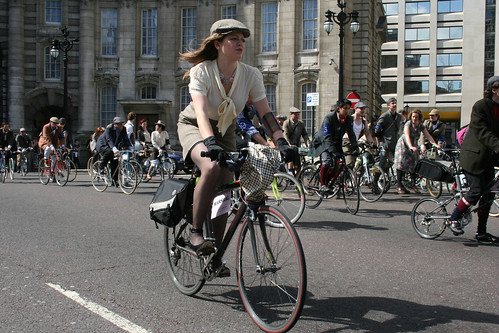
Fashionable Ladies Crusading Through Town!

Fashionable Ladies Crusading Through Town!
By: Melissa Bell

Supporters of the “Let's Double the Number of Women & Girls Riding Bikes” campaign will zoom through downtown Long Beach for a friend and fundraiser on Saturday, March 24th .

Bike enthusiasts who donate $40 can join a morning bicycle tour, enjoy a healthy lunch at SIP Lounge, and support Women On Bikes So Cal (WOBSC); a non-profit organization, based in Long Beach, which focuses on advocacy for women bicyclists. Their current campaign project aims to increase ridership among under-represented women; as well as, to improve health and community issues like traffic congestion, safety, and pollution.

“The effects of the Let’s Double the Number of Women & Girls Riding Bikes campaign will create an atmosphere of confident women & girls who feel good about themselves because they will be more knowledgeable about cycling, can safely ride and handle a bike, provide basic maintenance when needed, are more physically fit and active, and are reducing the amount of pollutants by riding bikes locally rather than driving”, says Cali Bike Tour’s Elizabeth Williams. “Getting women to ride bikes will cause them to encourage their children and husbands to ride as well. This campaign will be a catalyst to cause communities to be more active, health conscious, and eco-friendly”, she concludes.

The goal is to raise $10,000 by summer 2012 to create the first League Certified Bike Safety Instructor (LCI) scholarship program for women. The program will then train women to teach others about bike safety; encouraging them to feel more comfortable about riding regularly around town. This would be a huge step for WOBSC’s goal to help double the number of women and girls actively riding bikes in Southern California by 2017.

A report by the Alliance for Biking and Walking, said that women represent just 24% of bicycle trips and 15% of Long Beach bike-to-work commuters.

Pat Hines, director of Save Moves, believes that, “Women who aren't regular riders feel intimidated by bicycling because they don't know what kind of bike is best, where to ride and how to ride. A program like this can provide this kind of information.”

Another aspect to this campaign is to promote ridership for under-represented women. Williams’ Cali Bike Tours is in collaboration with WOBSC and believes "there might be a disadvantages when contributing to mothers who don't speak English or the women who live in shelters or the women who believe their hair has to look a certain way in corporate America and fear jeopardizing their career advancement”, she said.

There is no discussion to whether or not there will be Spanish speaking workshops for the LCI program. However, this will be a huge factor in reaching their goal of increasing the number of under-represented women riders. Outreaching to not only Spanish speaking, but targeting the community as a whole will definitely benefit everyone.

Will bicycling will be just another trend? Especially with all the fancy priced gear and expensive frames. Baden doesn’t consider this to be an option. With the economy seeming to get worse and gas prices rising up, and up with no end in sight; biking seems to be a lifestyle change rather than a fad. Plus who is to say you need that fancy bike? A secondhand bicycle will provide you with the same experience.

“Ladies have a unique skill that I don't believe we have as men, they are excellent litmus paper for determining whether a trend will remain a fad or become a social norm”, said Graham Baden of Pedal Movement. “Having ladies on bikes means biking has now become socially acceptable. This was not the case a few short years ago.”

Another concern brought to light by Pedal Movement’s Graham Baden, is that most girls, and young women will not associate themselves with city officials. He says, “While there are some really fantastic women championing it like Suja Lowenthal and Melissa Balmer, I worry that they are a bit out of reach for the average girl. The ladies leading the mission are fantastic role models and I look up to them. But city employees are not the best at making things cool, I'm sorry to say. If we're not able to find and support a young eager trendsetter generation of girls to ride bikes, it will never take hold.”

This is another factor to consider. Most young women are not interested in politics or what politicians have to say. Therefore, striving to get them to do something without someone they can relate to is going to be difficult. At then end of the day it should be about the joy a bike ride can provide.

Community Gardening in Long Beach


            Within every community lie trials and tribulations, yet most citizens find a way to unite and either fix the issues or keep their head up throughout the rough times. The city of Long Beach has seen its share of poverty, crime and problems but still managed to unite and create organizations that will benefit the citizens overall.
A few organizations have come around in the hopes of bettering the community, and some have succeeded further than others.
           
Many community gardens have opened up in the Long Beach area and are focusing on citizens who are struggling to feed their families, especially with the troubles of today’s economy. The goal of these gardens is to rent out plots of land to underprivileged families and have them grow their own fruits and vegetables throughout the year for their very own use.
           
“We are an association similar to a condo where families pay a small charge for a membership,” says Lonnie Brundage, president of The Long Beach Community Garden Association, “We have assigned 306 plots so far, which equates to about 700 people of more depending on how many children are involved.”
           
Lonnie Brundage became involved with this organization in ’96 after she had open-heart surgery and felt the need to accomplish something big in her life. She found out the Long Beach Community Garden Association needed members and signed up. After a few years of working with this organization, she finally became president and now oversees and manages its 700 plus members.
           
“The most gratifying part of my job is knowing the good that we do because we donate to several charities in Long Beach as well as having the satisfaction of knowing that families now get to enjoy eating fresh food,” says Lonnie.
           
Another organization devoted to gardens as a means of fresh produce for poor families goes a step further and incorporates the idea of organic produce as well. Long Beach Organic, founded in ’94, operates seven organic gardens in Long Beach and is hoping to expand even more.
           
“Families rent a small piece of ground for their own vegetables. We have roughly 200 customers right now. I simply am there to make sure those gardens are maintained by our volunteers,” says Joe Corso, garden director of Long Beach Organic, “We have our work days on Saturday mornings and afterward all hang out together. The socializing part of it becomes fun.”
           
Joe Corse began as a gardener five years ago at one of the gardens. He realized the importance of organic agriculture and wanted to make people aware of the impact of how food is grown. As a garden director he now oversees all of the volunteers and must make sure that the families are using their rented plot of land properly.
           
“The biggest challenge so far has been dealing with people who rent a spot and don’t use it. My job is to make sure that people will use that plot, I try to give them encouragement. It has been an ongoing issue, and that is the only part of the job I don’t like…policing people,” says Joe.
           
Aside from the challenge of making sure the reservoirs are utilized, Joe’s favorite part of the job is beginning the gardens and seeing how much they are able to grow. Even though Joe says he isn’t an “organic fanatic” he believes that using decomposing organic matter in the soil is much more beneficial than using chemical pesticides.
           
Both of these organizations, Long Beach Community Garden Association and Long Beach Organic, have illustrated major progress toward the improvement of the surrounding community and the citizens have surely noticed.
           
“I love the idea of growing your own fresh fruits and vegetables. You know exactly what goes into it and you don’t have to worry about any harmful chemicals because it’s your own garden,” says Tania Ramirez, a Long Beach resident and mother of two.
           
Tania doesn’t own a plot of land yet but she is interested in finding out more about these organizations, especially the one that focuses on organic produce.
           
“I have two kids and I always worry about what they eat. I haven’t ever thought about growing my own food before and what a great idea that is,” says Tania.
           
Community gardens may not solve all of the world’s problems, but they are a positive step in the right direction. They focus on the overall health of the community and give individuals one less thing to worry about as well as bring families and friends closer together.